Trace Technologies
The data can help to understand the world around us
Recently at

Start-up of Abruzzo Region
 www.tracetech.it
 Description
Trace Technologies was born on 18 May 2021 from the meeting between Marco Ferrante and Carlo Capretta and the intersection of their entrepreneurial experiences. Marco with years of experience in the data analysis and research world; PhD in physical and chemical sciences at the University of L'Aquila with specialisation in innovative analytical techniques applied to the world of food traceability and agritech. Carlo with a humanistic background turned instead to customer-oriented communication and sales.
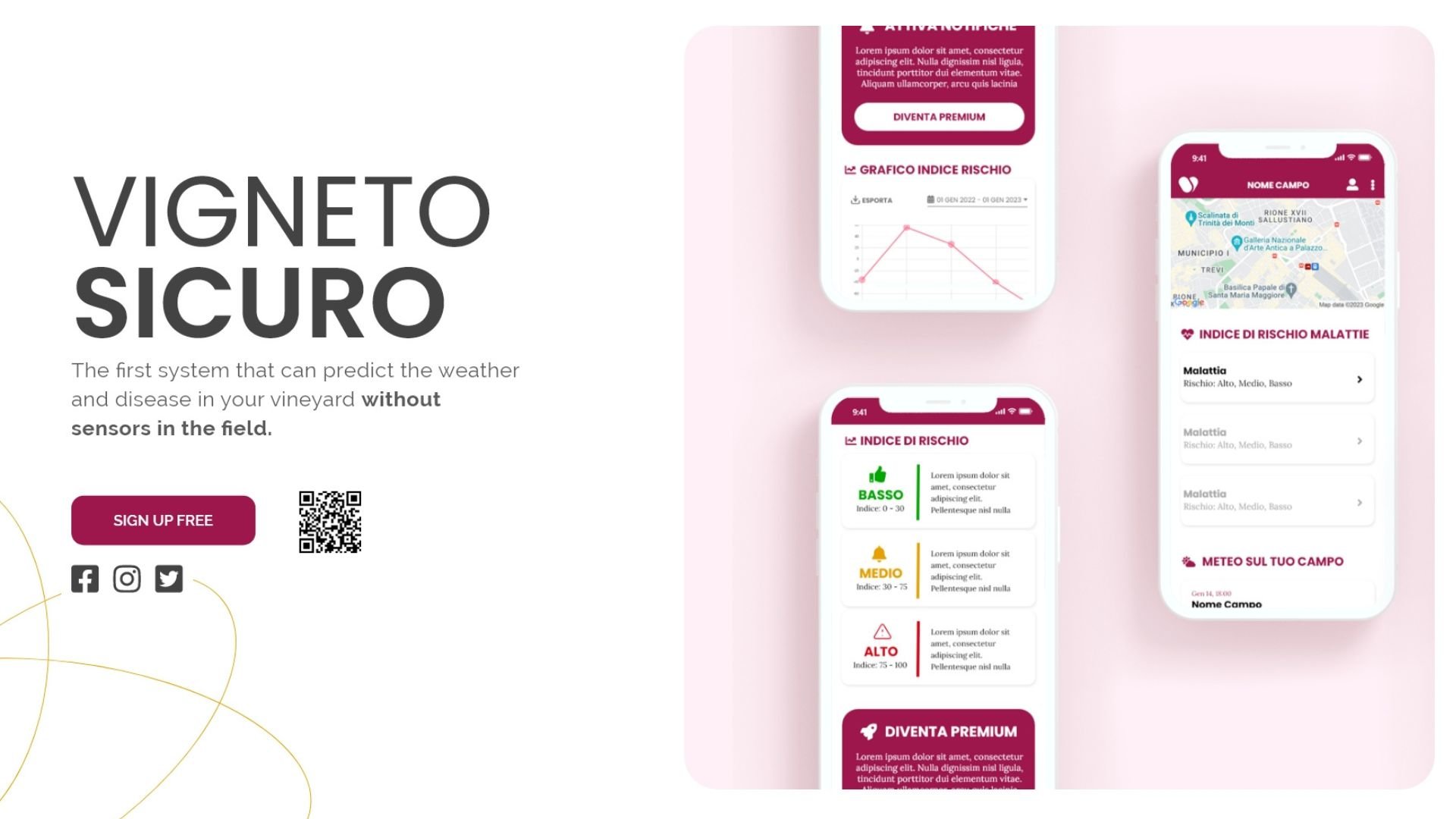
The initial mission is to create a scientific traceability ecosystem that collects data through cutting-edge technologies and processes them to generate useful information in order to innovate the primary sector by proposing a sustainable agriculture-oriented approach. Immediately declined in the wine sector, the startup's mission gave rise to the Vigneto Sicuro project with which the company aims to support the winegrower in the prevention of vine diseases, enabling him to save on the cost of phytosanitary treatments and minimise environmental impact.